
Bolivia’s climate action targets under the Paris Agreement set an ambitious vision for its energy sector by 2030. Targets include increasing electricity coverage to 100 per cent of the population, expanding renewable energy capacity and piloting energy storage technologies.
Recognizing the need to track progress towards its climate commitments, Bolivia’s government sought support from the Initiative for Climate Action Transparency (ICAT) to strengthen national institutional governance, tools and capacity for data-based tracking and evaluation of climate action in the energy sector.
The project included a special focus on policy impact assessment and generating actionable information for decision-makers to plan and evaluate progress against energy-sector mitigation targets in Bolivia’s Nationally Determined Contributions (NDCs).
The project, which ran from 2023 to 2025, was led by the Plurinational Authority of Mother Earth (Autoridad Plurinacional de la Madre Tierra), with technical support from experts from the Greenhouse Gas Management Institute (GHGMI).
Generating evidence for energy policies and actions
The ICAT project strengthened Bolivia’s capacity to assess climate policies and develop sectoral greenhouse gas projections. The country selected the Greenhouse Gas Abatement Cost Model (GACMO) as a tool for projections. GACMO was adapted to reflect national circumstances and used to gather data for energy policies relevant to NDC implementation. This information subsequently supported the assessment of policy impacts.
After consultations, stakeholder feedback and data analysis, two priority policies and actions linked to Bolivia’s NDC targets, related to solar energy and electromobility, were selected for impact assessment. For the assessment, the project applied the ICAT Renewable Energy Methodology and the WRI Policy and Action Standard.
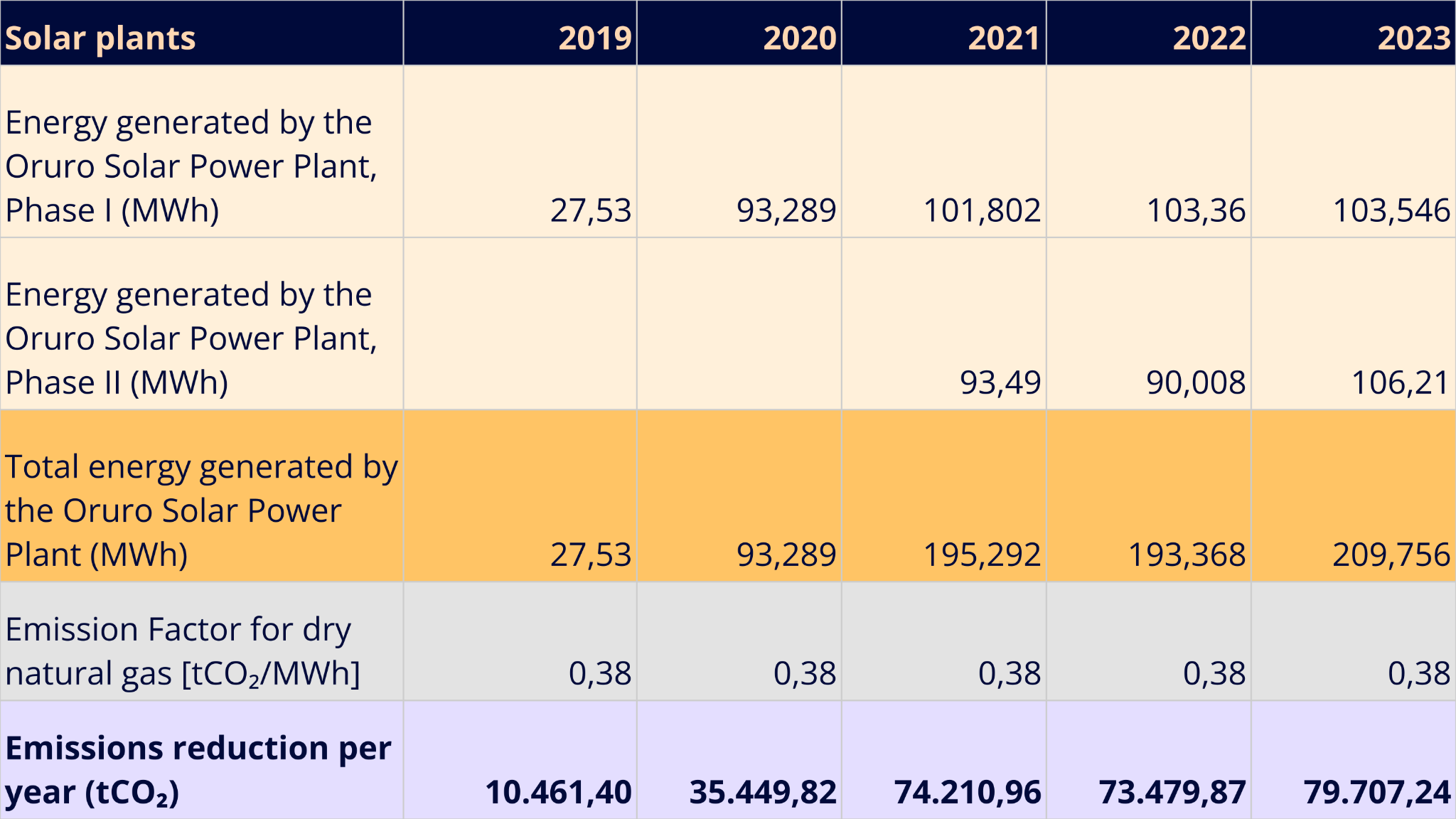
An ex-post assessment of the Oruro Solar Plant’s Phases I and II, an action under Bolivia’s 2021-2025 Economic and Social Development Plan, demonstrated the significant contribution of solar energy deployment to emission reductions. Between 2019 and 2023, the solar plant generated increasing amounts of renewable electricity and achieved important reductions in CO₂ emissions. Annual emission reductions ranged from approximately 10,500 tCO₂ in 2019 to approximately 79,700 tCO₂ in 2023, confirming the plant’s role in displacing fossil-fuel-based electricity generation.
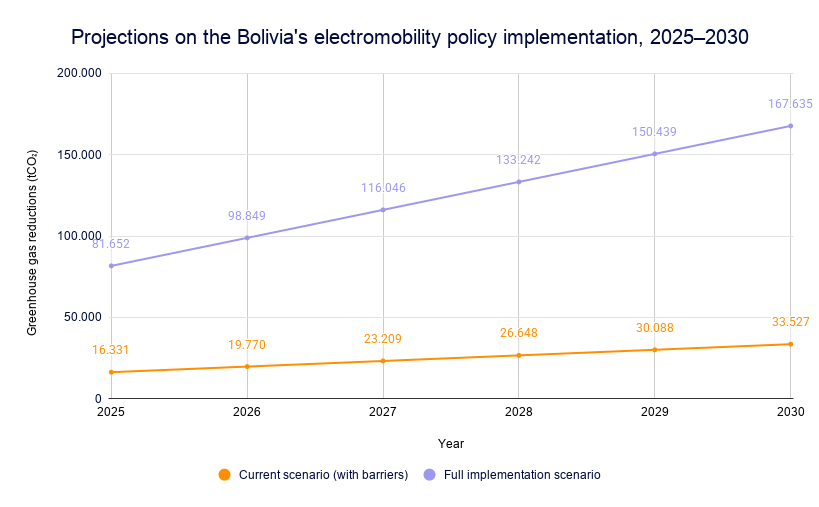
An ex-ante assessment of Bolivia’s electromobility policy (Supreme Decree No. 4539) estimated significant mitigation potential between 2025 and 2030. Under a full implementation scenario, the policy could reduce emissions by approximately 747,862 tCO₂, while current implementation barriers could limit reductions to around 149,573 tCO₂, at 20 per cent of the full implementation scenario. The analysis highlighted both the substantial climate benefits of electromobility and the importance of addressing regulatory, financial and technical barriers to achieve the policy’s full potential.
Bolivia further analyzed data gaps and identified key data needs for future modelling efforts, improving understanding of requirements for future projections and evidence-based policy analysis.
Strengthening national ownership in the NDC process
After reviewing the institutional arrangements supporting the preparation of the greenhouse gas inventory, the project developed proposals that define key elements, including roles and responsibilities, operational regulations, and agreements with sectoral data providers.
Another major achievement of the project was the establishment of a framework for tracking the NDC target for the energy sector. Indicators were Specific, Measurable, Achievable, Relevant and Time-bound (SMART) and aligned with the Modalities, Procedures and Guidelines (MPGs) of the Paris Agreement’s Enhanced Transparency Framework. Indicators covered electricity access, power generation and installed capacity, deployment of renewable and alternative energy sources, energy efficiency and transport electrification.
The project defined methodologies, identified information sources and conducted a preliminary assessment of data availability for each indicator. These elements were integrated into a dedicated NDC tracking tool that includes calculation formulas and reporting formats, facilitating monitoring and reporting processes. The tool offers the flexibility to be updated with new goals, indicators, and baseline and target values for every new NDC cycle, and can be integrated into the national climate platform.
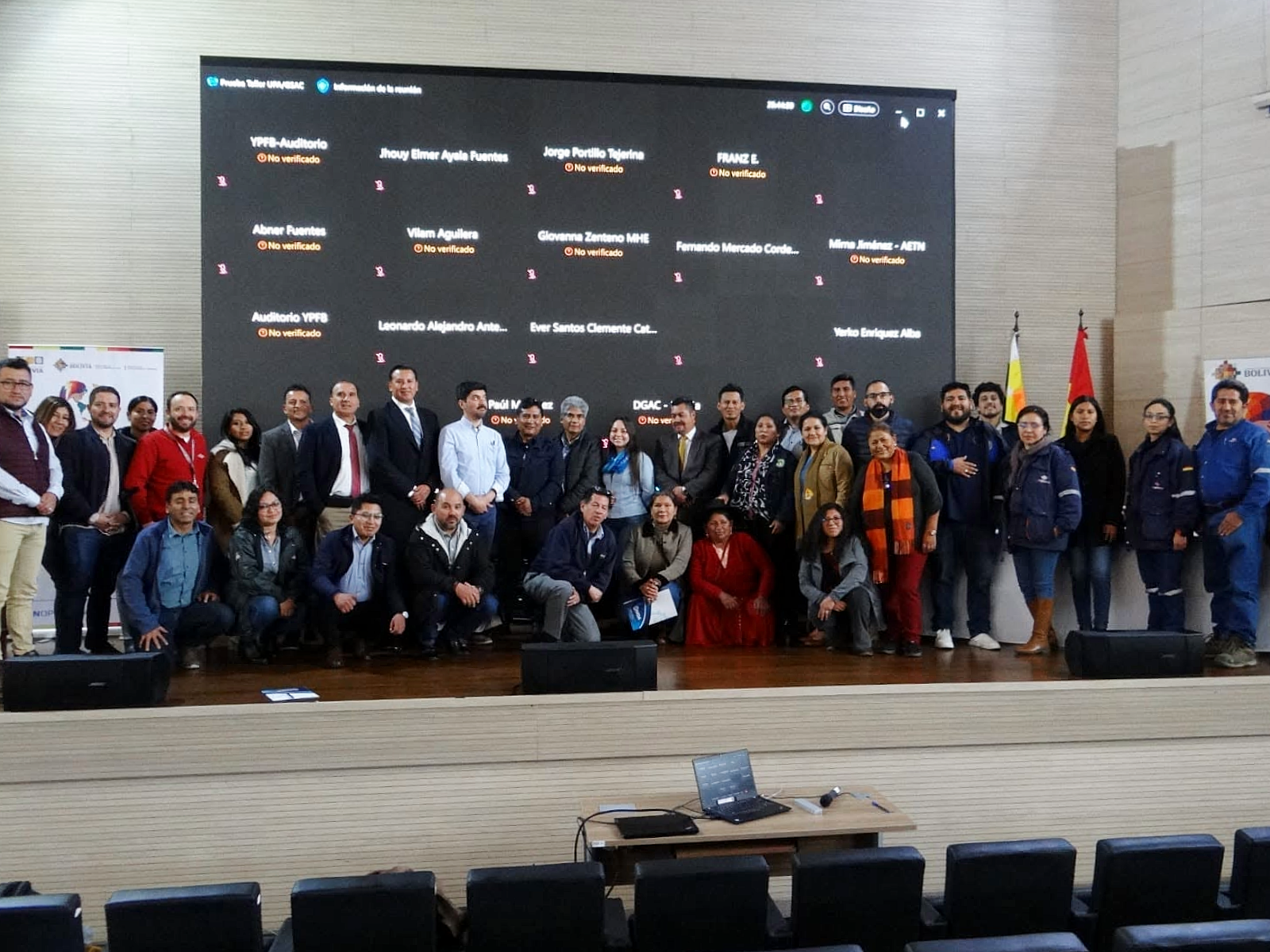
The validation and training workshops conducted throughout the project fostered greater involvement of sector stakeholders in climate action and increased awareness of transparency requirements across institutions. This process helped create an enabling environment for climate transparency and strengthened ownership of NDC targets and measures, as well as their implementation and monitoring.
Creating lasting capacity for Paris Agreement implementation
The impact of this work extends beyond the project itself, improving the capacity of Bolivia’s institutions to systematically track and report climate change mitigation action in the energy sector. The proposed institutional arrangements for inventory preparation and NDC tracking have been well-received by national stakeholders and are being considered for formal adoption.
Furthermore, Bolivia populated the energy sector NDC tracking tool with the latest available information and used it as a basis for the NDC tracking chapter of its first Biennial Transparency Report, demonstrating the project’s direct contribution to the country’s transparency and reporting efforts under the Paris Agreement.
Building on the positive results of the first ICAT project, Bolivia and ICAT are continuing their collaboration through a follow-up project launched in 2026. The new project aims to enhance the existing transparency framework by enabling the tracking of Bolivia’s NDC 3.0, updating the National Monitoring Platform, and evaluating the mitigation impacts of forest and agriculture policies.
Figures adapted from: Report on the impact assessment of mitigation policies and measures in the energy sector for ICAT-Bolivia (2024).
All technical reports from the project are available (in Spanish) on the ICAT Bolivia webpage.
ICAT tools and methodologies used in this project: